


Tokyo National Museum, Asian Gallery: Dreams in turbulent times
- open date
- 10th February to 22nd March
- Venue
- Tokyo National Museum, Asian gallery Room No.8
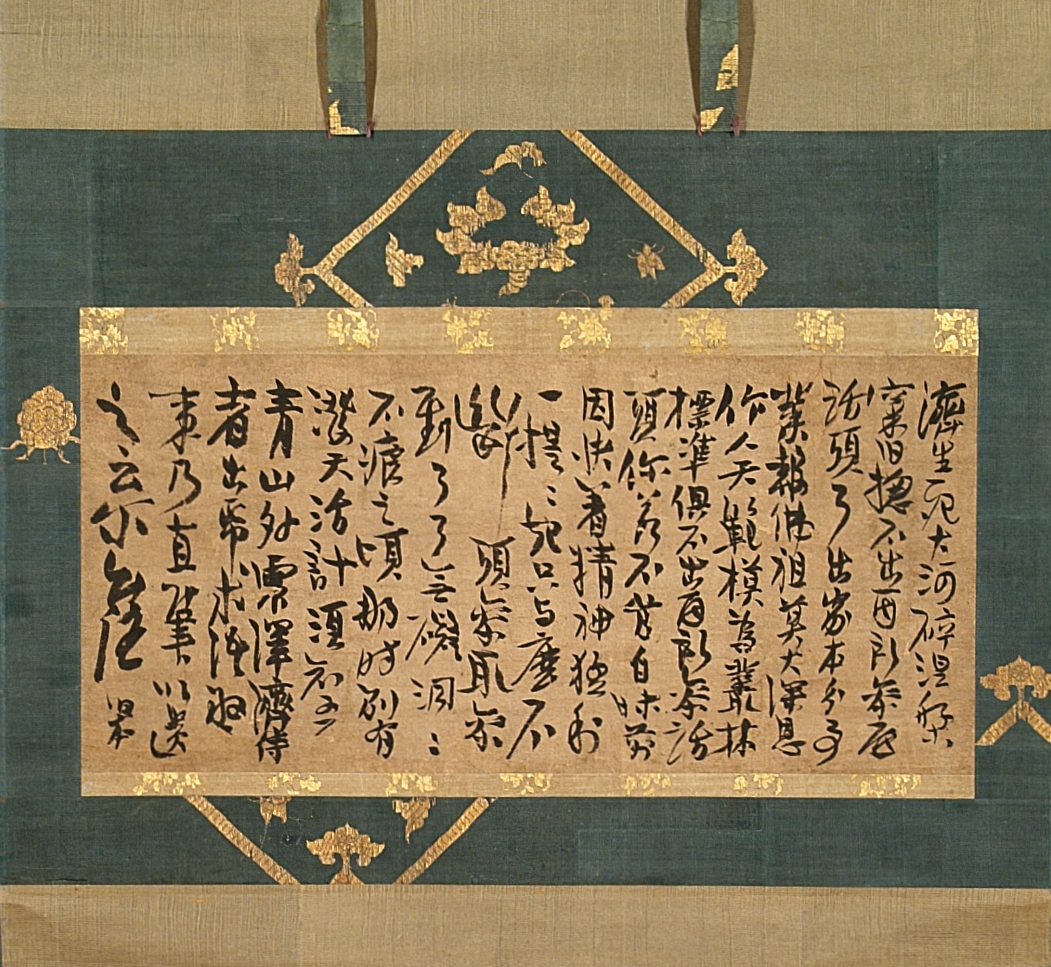
The calligraphy by Zhongfeng Mingben, Important Cultural Property, from Tokiwayama Bunko Foundation will be on display at Asian Gallery room No.8 of Tokyo National Museum.
While many pieces of calligraphy written by famous Chinese Zen monks, known as “Bokuseki,” remain in Japan, none of these works by famous Chinese monks actually remain in China. Why is this? Historically, China recognized calligraphy as an art form early on, and those who were considered to have written characters worthy of appreciation even in later generations were mostly politicians who had passed the imperial examination. Their calligraphy was based on their study of historically esteemed calligraphy and their understanding of its norms, and then with their own individuality. For the Chinese, who appreciate such calligraphy, the writing of Zen monks, which has no norms, may have been unappreciable. The reason that calligraphy by Zen monks remains in Japan as Bokuseki is not because of the appreciation of the characters, which focuses on the beauty of the characters and style, but because of the respect for the writers.
Zhongfeng Mingben (1263-1323) was a representative Zen monk of the Yuan Dynasty in China. He refused to accept invitations from official temples, but instead lived on a boat or in a hermitage, calling himself “Genju(Living in fantasy).” Many monks from Japan came to him, admired for his virtue living apart from the world. This calligraphy was written by Zhongfeng to encourage an attendant named “Sai” who had come from Japan in his training.
Zhongfeng’s calligraphy style is unique, and it is known that in Japan Shuho Myoucho (1282-1337) was an admirer of his style. Sometimes the calligraphy of Zen monk is expressed to have “without norms,” but I hope that you will be able to imagine what kind of person he was from his unique handwriting, and also take note of the mountings done by later generations who respected him and had his calligraphy made into hanging scrolls.

-
Important Cultural Property 'Words for Priest Named Sai to Encourage His Diligence and Ascetic Practice' by Zhongfeng Mingben, Ink on paper, Yuan dynasty, 14th century
