


Tokyo National Museum: Asian Galllery “The World of Tombs”
- open date
- from March 24 to August 16, 2026
- Venue
- Room No. 8 of Asian Gallery
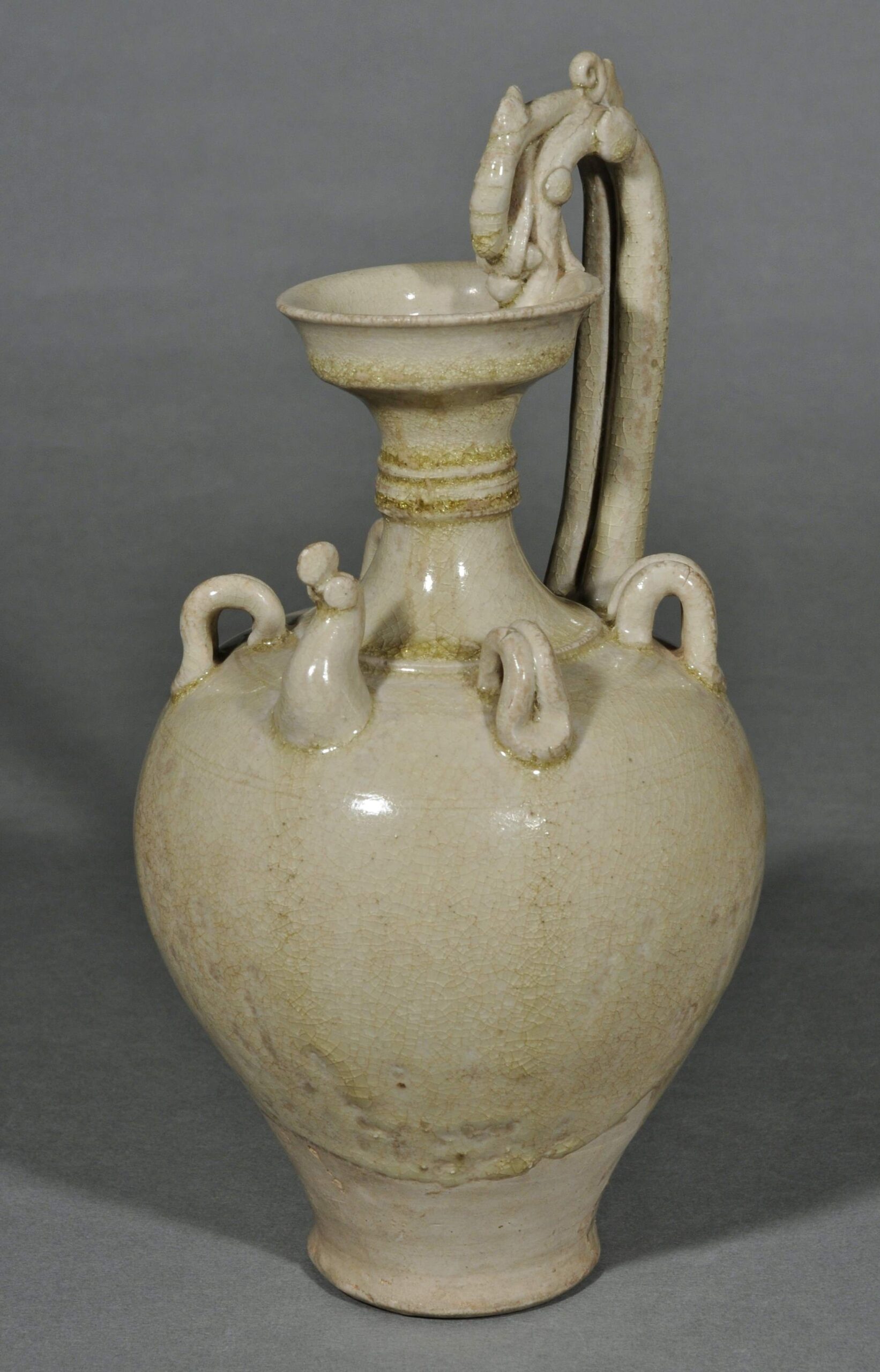
The white porcelain bottle with dragon-shaped handle and chicken-head ornamnent from our Tokiwayama Bunko collection will be exhibited at the Tokyo National Museum’s exhbition “The World of Tombs.”
The white porcelain bottle with dragon-shaped handle and chicken-head ornament
H 24.8cm
Sui dynasty, the end of 6th century to the beginning of 7th century
This type of bottle, bottle with dragon-shaped handle and chicken-head ornament on the shoulder, first appeared in celadon during the Eastern Jin dynasty in China, then in lead-glazed pottery during the Northern Qi dynasty, and in white porcelain during the Sui dynasty, before disappearing. The Tokiwayama Bunko collection houses two white porcelain bottles with dragon-shaped handle and chicken-head ornament, and while they share the same basic shape, they offer very different impressions. The glaze on this piece, which extends all the way to the base of the body, is greenish, and where it pools, it has vitrified to a green color. It has a whiteness that is not quite what you’d call celadon, but it hasn’t quite reached the stage where it could be called white porcelain; it seems to be in the transitional stage from celadon to white porcelain.
White is often thought of as a basic color, but in pottery, white is a color that cannot be produced unless desired. Celadon is made by applying an ash glaze to clay containing iron and firing it at high temperatures. White porcelain cannot be produced unless the iron is removed from the celadon clay and glaze. In other words, white porcelain cannot be produced unless it is desired. Of course, as long as the technology to make celadon exists, it is possible for white porcelain to be produced by chance, but in order to sustainably produce white porcelain, there must be a will to pursue “white.”
It is not known what the trigger was, but for some reason people in the Sui dynasty seemed to realize that by removing impurities from the clay and glaze, they could create white, hard ware namely white porcelain. I hope you will enjoy looking at this work, which is not yet completely white, and imagine a time when people first began to desire white.

-
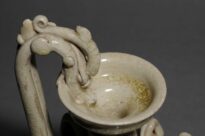
The white porcelain bottle with dragon-shaped handle and chicken-head ornament (detail) H 24.8cm Sui dynasty, the end of 6th century to the beginning of 7th century
