


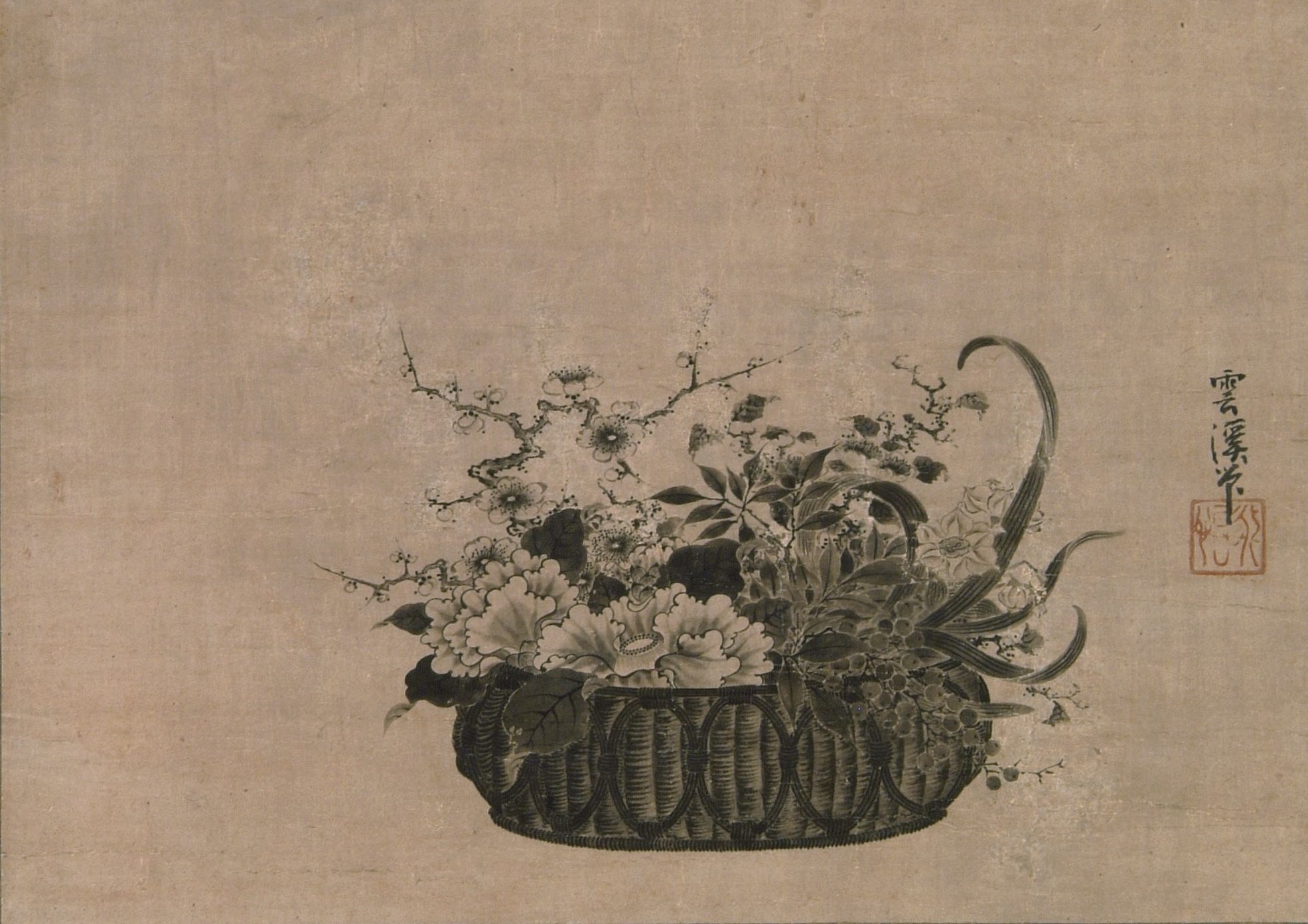
Basket with Flowers by Unkei Eii
- Hanging scroll, Ink on paper, 30.3×42.9㎝
- Muromachi period, 16th century
Since the Edo period, Unkei Eii has been understood, based on descriptions in books such as “Honcho Gashi (A History of Japanese Painting)” and “Gako Binran (Handbook of Painters),” to be an artist who “studied painting techniques under Sesshū and resided at Mount Koya.” From surviving records and works, he is known to have been a successor to the Sesshū style. He is known to have been active mainly in the Suo and Nagato regions (present Yamaguchi prefecture) for approximately 50 years, from the Eishō period (1504-21) to the Tenbun period (1532-55). Approximately 30 surviving works remain, spanning a wide range of work, including Buddhist paintings, portraits, and votive plaques.
This work is based on floral painting by court painter from Yuan and Ming dynasties, and is painted in ‘Mogu (boneless) style,’ a technique in East Asian painting in which forms are rendered without ink outlines. It bears the signature “Unkei” and a red square seal reading “Eii.”


